




CHAPTER TWO
A spirit of global adventure: Our Timeline
1799
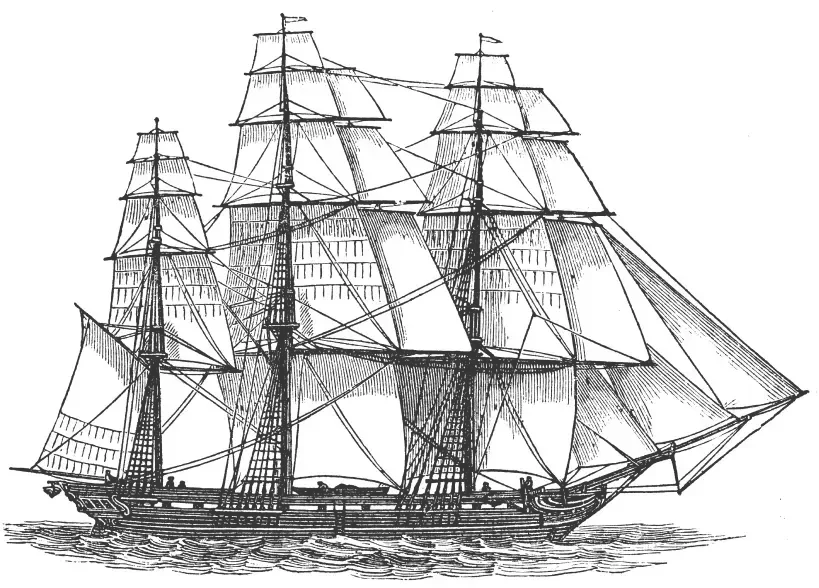
In 1799, Alexander Johnston invested in international shipping to ensure his wool reached distant markets.
Embracing the opportunities of the sea and maritime trade, he established clients in Canada and Jamaica. Considering himself both 'merchant and manufacturer', Alexander nurtured Johnstons of Elgin's spirit of global adventure.
1813
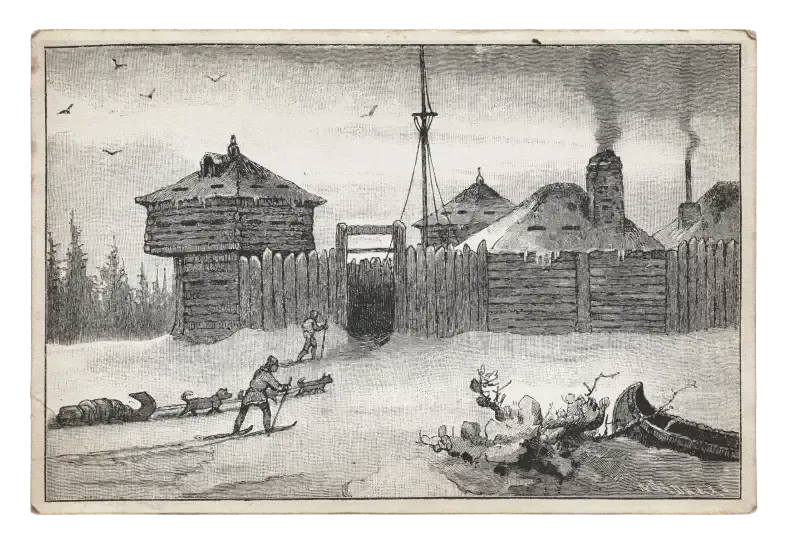
'Duffles' and 'kersies', usually green with a long nap, were types of woollen cloth used for coverings and linings that were much coarser than the Cashmere and Merino Wool we are renowned for today.
We began exporting these materials in 1813, with our first consignment heading to Nova Scotia, Canada, followed by the export of the same materials to Jamaica two years later.
1842
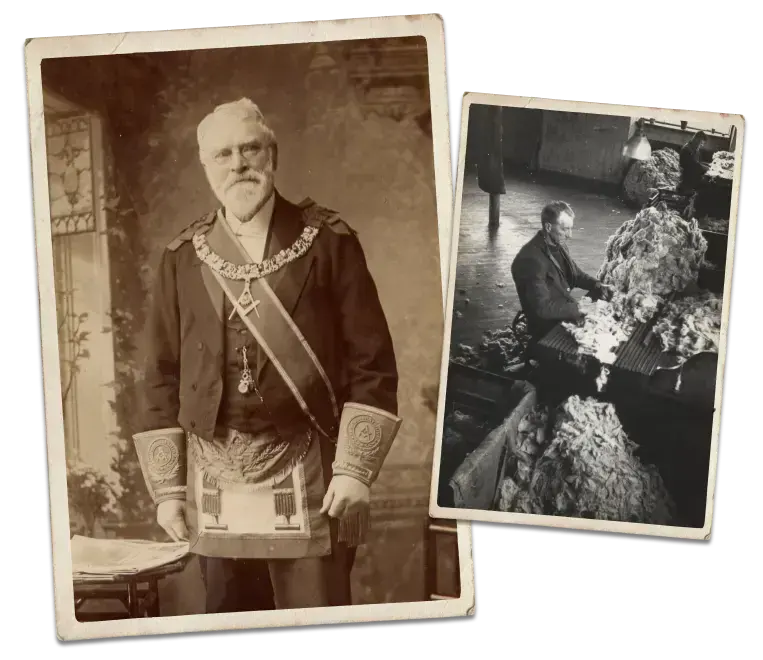
James Johnston embodied the essence of the modern entrepreneur, a concept idolised by Victorian Britain.
During the mid-1800s, he established our brand's relationship with luxury yarns: Alpaca wool in 1842, Vicuna fibre in 1849, Merino wool in 1851, and Camelhair in 1861.
1849
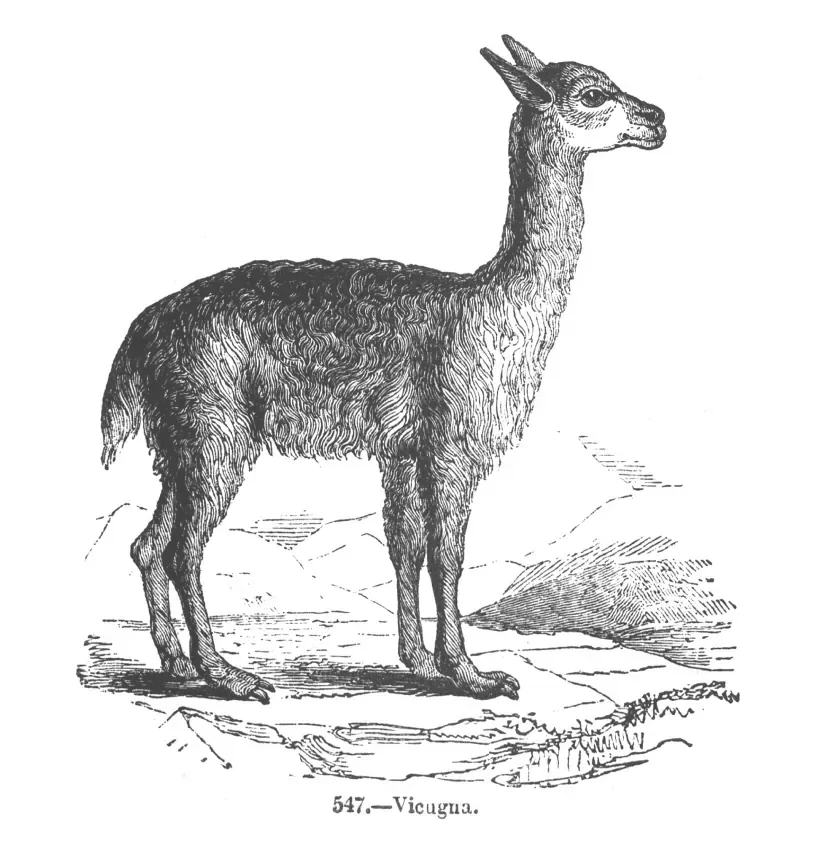
This year saw us receive our first import of Vicuna from Peru, sold to Johnstons of Elgin by James Jack, founder of one of Britain's most important international wool trading businesses.
1851
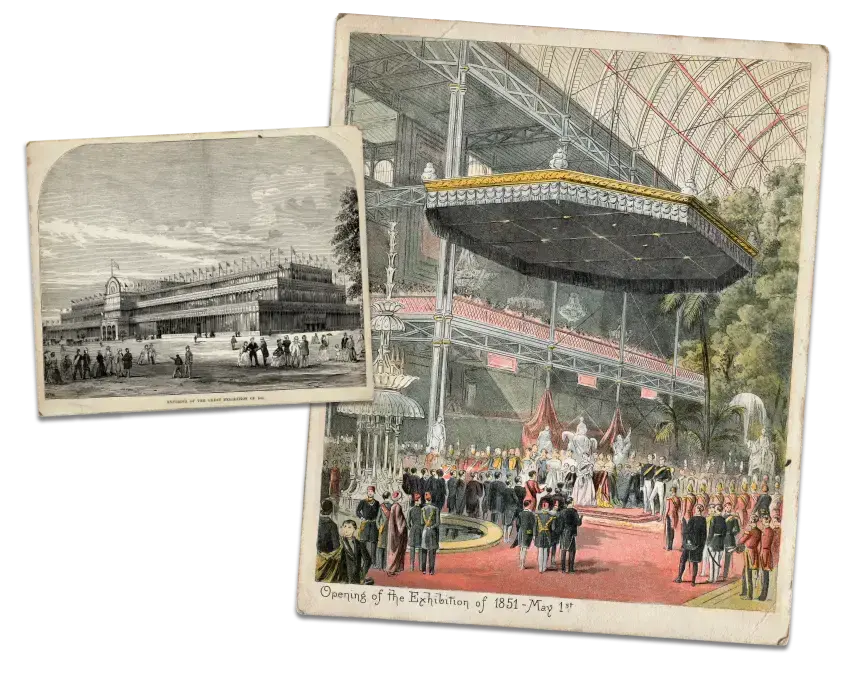
In 1850s Britain, the concepts of time, speed and distance had been reimagined, and technologies like the steamboat and train had established global connections like never before.
James Johnston and his family travelled from Scotland to London by train to attend the Great Exhibition of 1851.
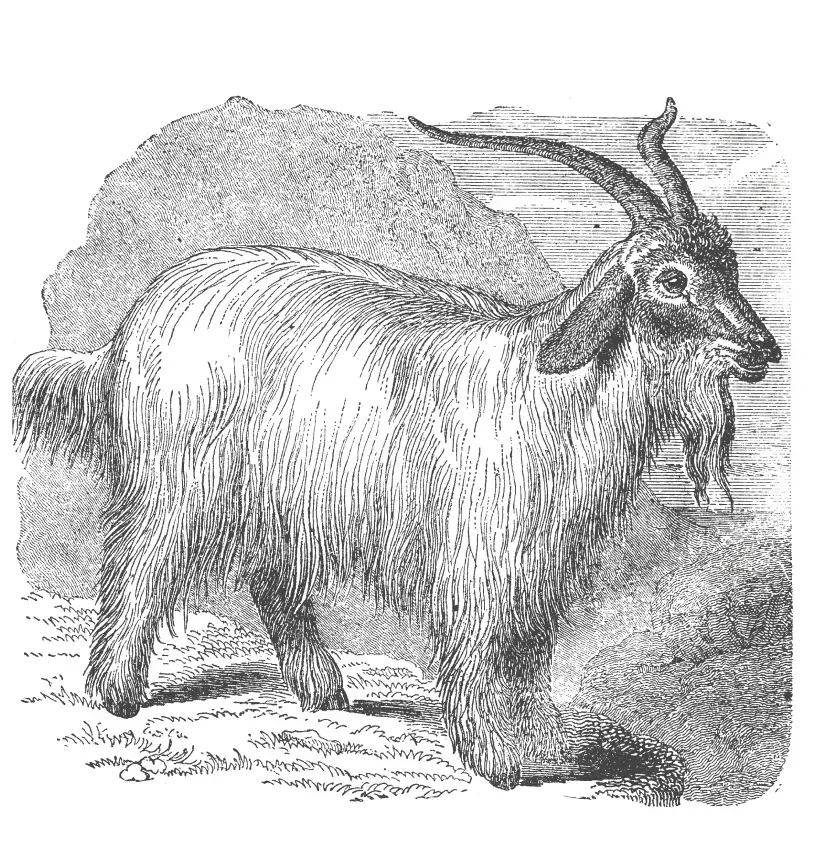
Driven by a quest for true excellence, James sourced yarns from China, Mongolia, Afghanistan, India, Peru, and Australia alongside our native Scottish wools. In 1851, we bought a bale of Cashmere fibre from F. Buxton of Basinghall Street, London and became the first Scottish company to weave with this precious yarn. More than 170 years later, this remains one of our most popular luxury fibres.
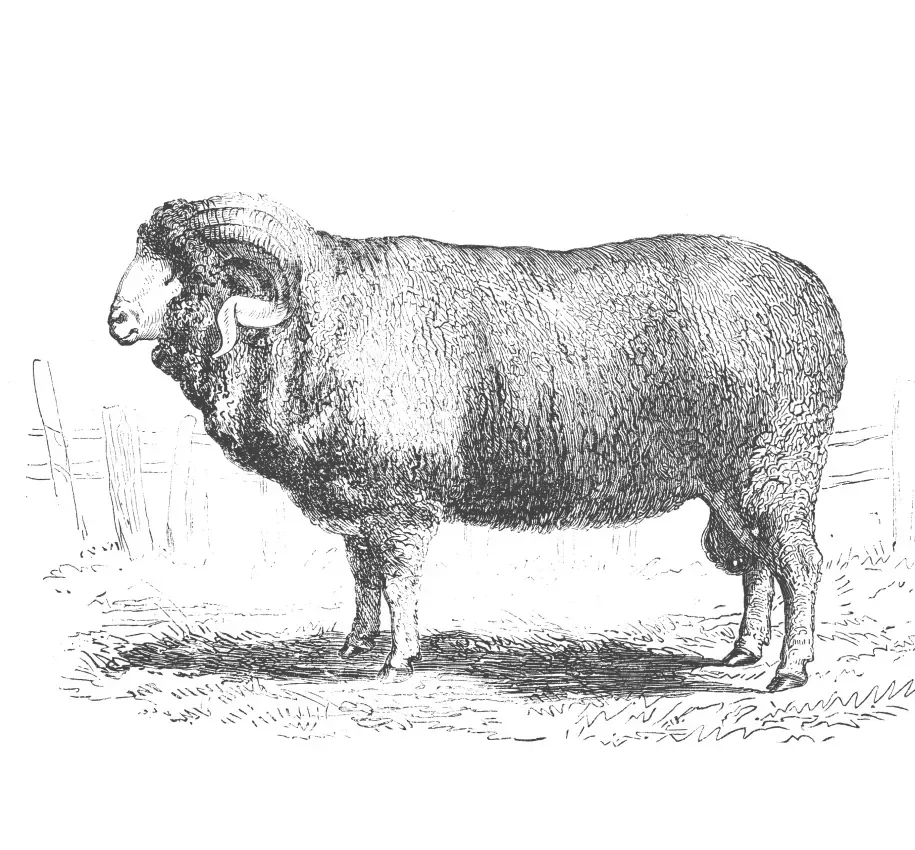
In October 1851, we received our first delivery of Australian Merino Wool: bales of 'Sydney wool' from F. Buxton of London.
1853
Our first shipment of stout plaids and tweed suits arrived in Sydney and Melbourne, Australia, fulfilling the hardwearing clothing needs of the miners.

1855
Johnstons of Elgin attended the 1855 International Exhibition in Paris, France.

1880
By 1880, France was the centre of our European market with more than 20 customers, mainly in Paris. The brand was also exporting to Italy and Belgium.
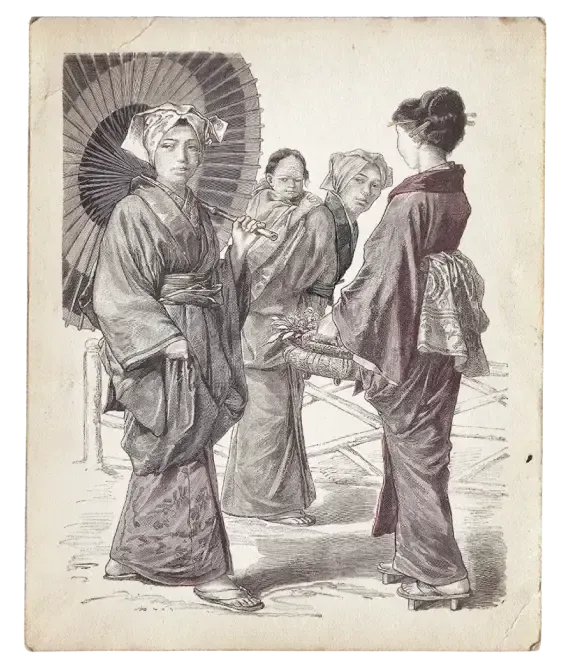
Setting his compass to explore further, Alexander Johnston's son James honed his knowledge and continued investing in shipping. He became an active director of the Elgin and Lossiemouth Harbour Company. In 1867, Japan reopened its borders to American and Western trade, allowing Japanese clients to experience our Scottish plaids, rugs, and tweeds in 'various patterns or colours'.

1890
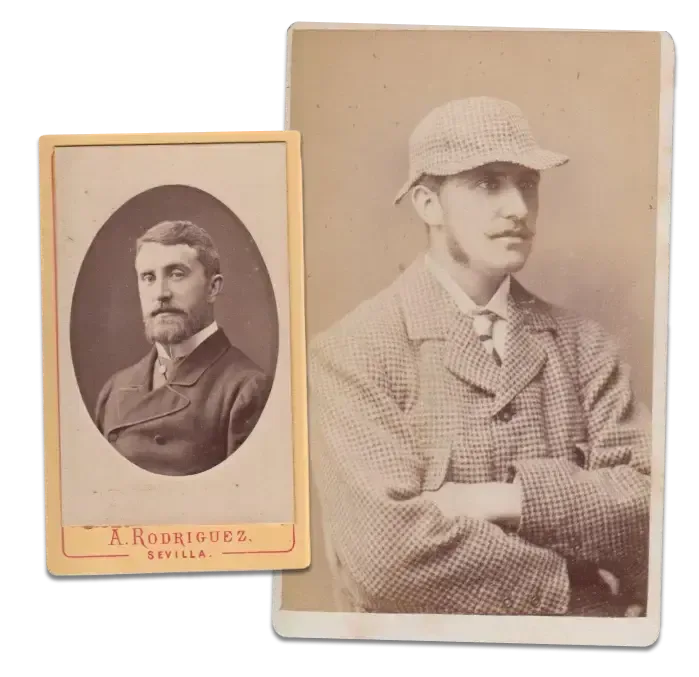
James Johnston's son Edward shared his passion for international adventure. During the 1890s, he founded Seville Football Club in Spain, which remains one of the most successful clubs in Europe.
1915
Our archives show orders from the French Service D'Intendance Francaise during WW1 for 'French Grey' and 'French Blue' cloth for French and Belgian Allied soldiers' uniforms.
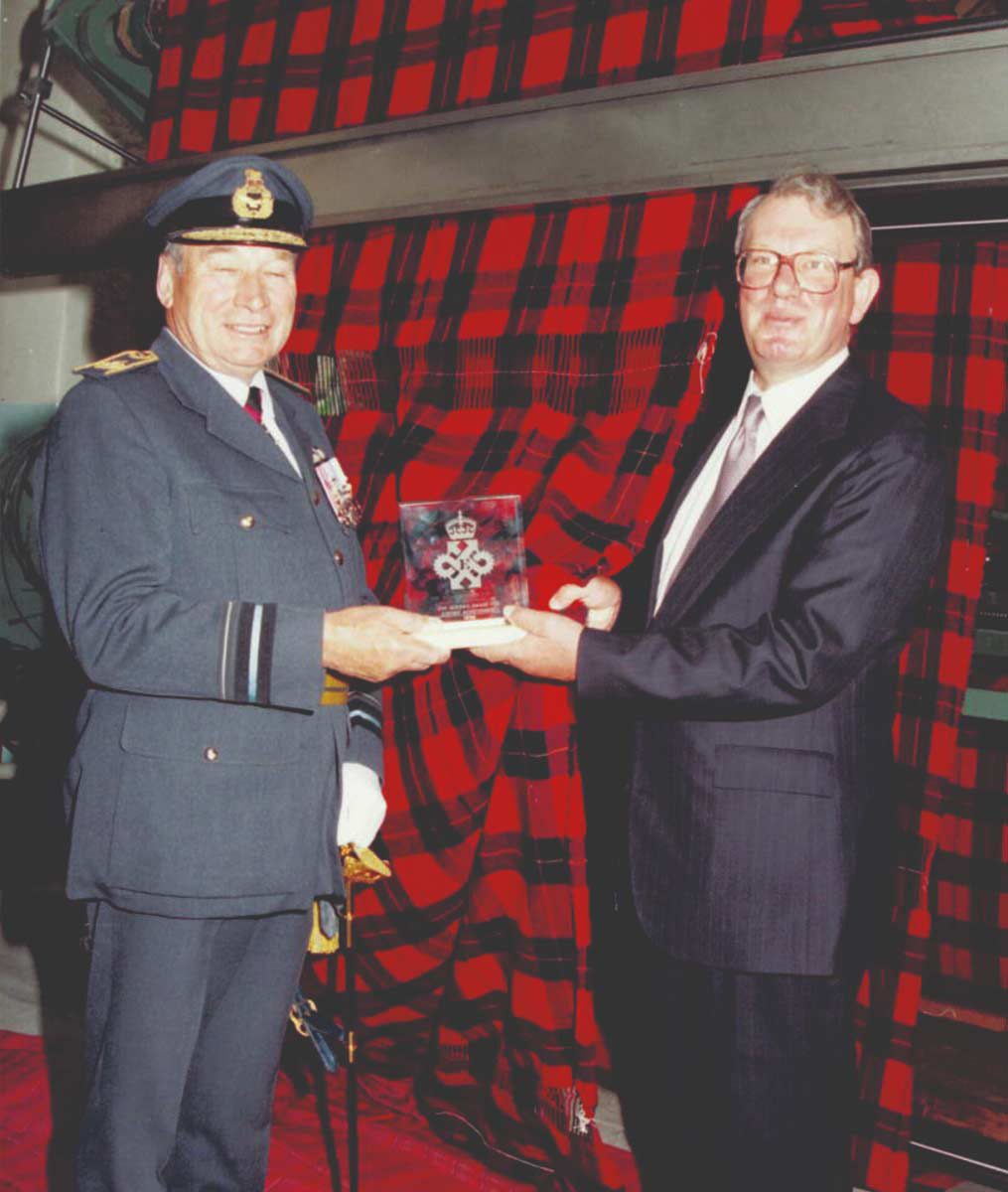
Our global outlook has continued, and in 1978 and 1994, our efforts were recognised with the Queen's Awards for Export.
1920s
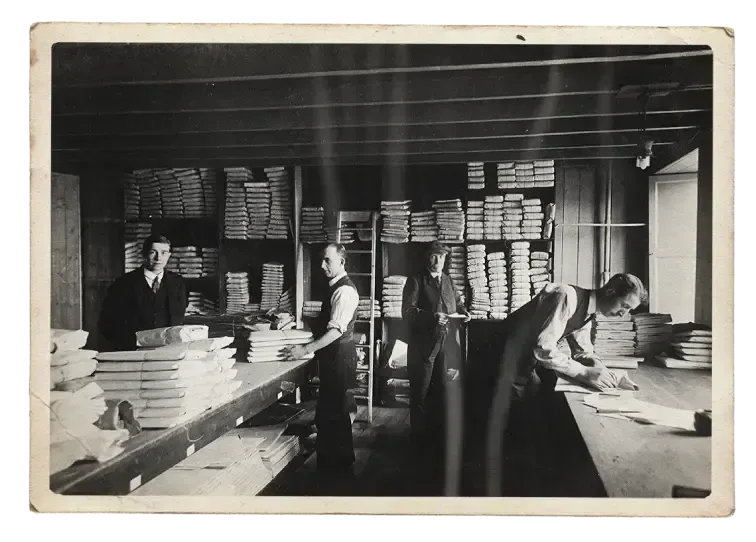
Early in our history, we recognised the demands of a new generation of travellers.
Technologies such as trains, steamboats and cars offered opportunities for speed and adventure but featured chilly draughts. In 1857, we crafted a 'Double Alpaca Railway Wrapper' for Lord George Gordon-Lennox of Gordon Castle, and by 1910 we were designing and manufacturing Car Rugs.
1950s
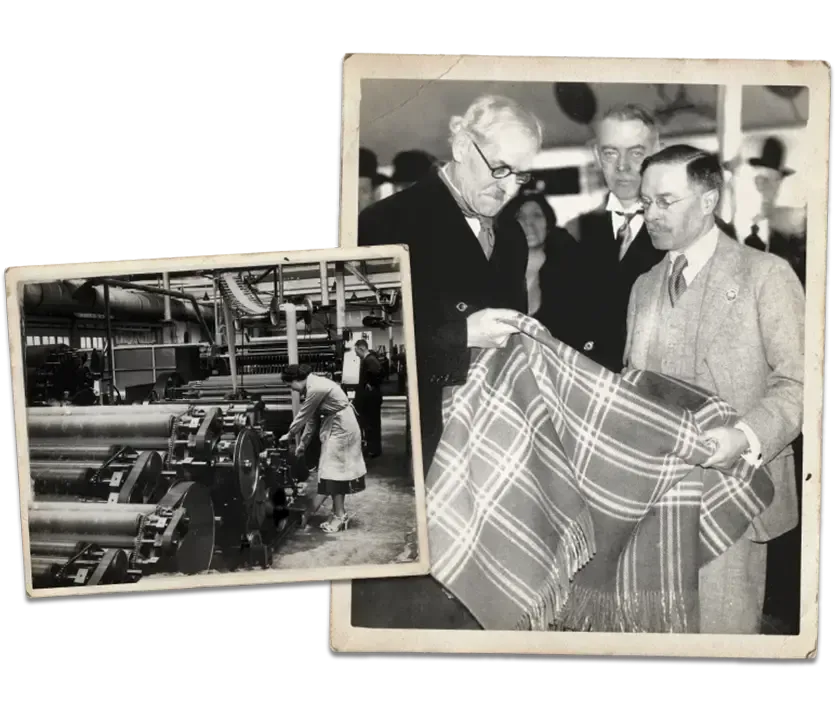
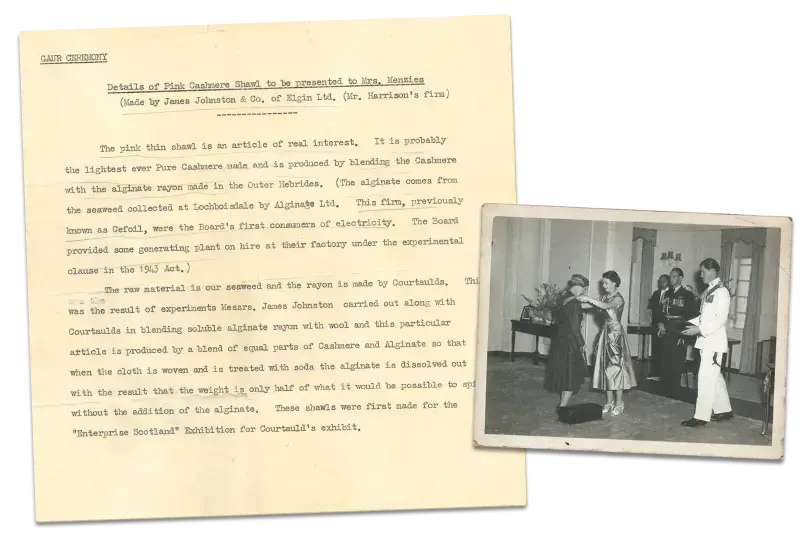
Our Cashmere and fine woollens have made their way around the globe over the years, and one, in particular, made its way back to us after more than 70 years.
During an official engagement in the early 1950s, Johnstons of Elgin presented Pattie Menzies, wife of Australia's longest-serving Prime Minister Sir Robert Menzies, with a delicate Cashmere shawl. Our longest-serving Chairman Edward Harrison sent the design to Australia, where it was described as 'an article of real interest...probably the lightest ever pure cashmere made'. Dame Pattie treasured the piece, and in 2021, following her death, her family returned the shawl to us for preservation in our archives.
1978
We were proud to receive the Queen's Award for Export Achievement in 1978, 1994, and 2002.
1980
Our Hawick Mill was established in 1980, marking our move into knitwear manufacturing. Soon afterwards, Manager and Director Jim Porteous took on a selling role, travelling to France, Belgium, Italy and the Far East to promote this new aspect of our business.

1997
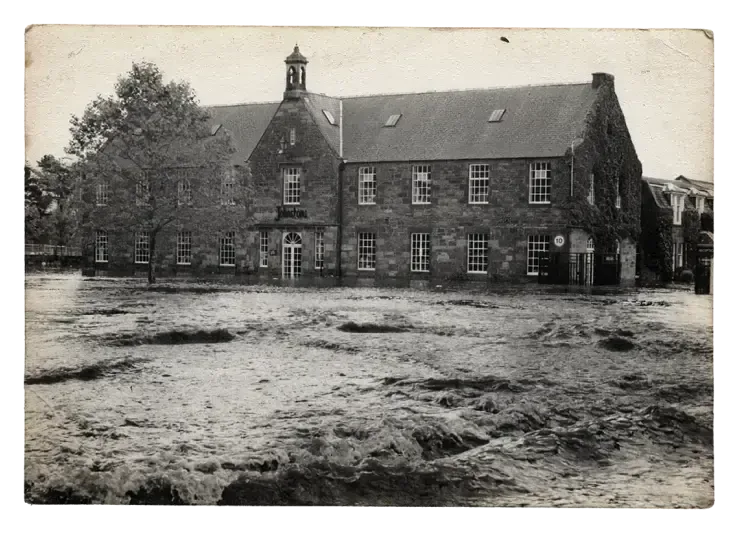
Following a devastating flood at our Elgin Weaving Mill, we travelled to the US, Korea, Japan, Germany, Italy, France and London, making personal visits to our partners to maintain relationships that have continued to thrive.
2015
We have worked with natural, renewable, biodegradable fibres since 1797, and our commitment to sustainability is at the heart of our brand's values.
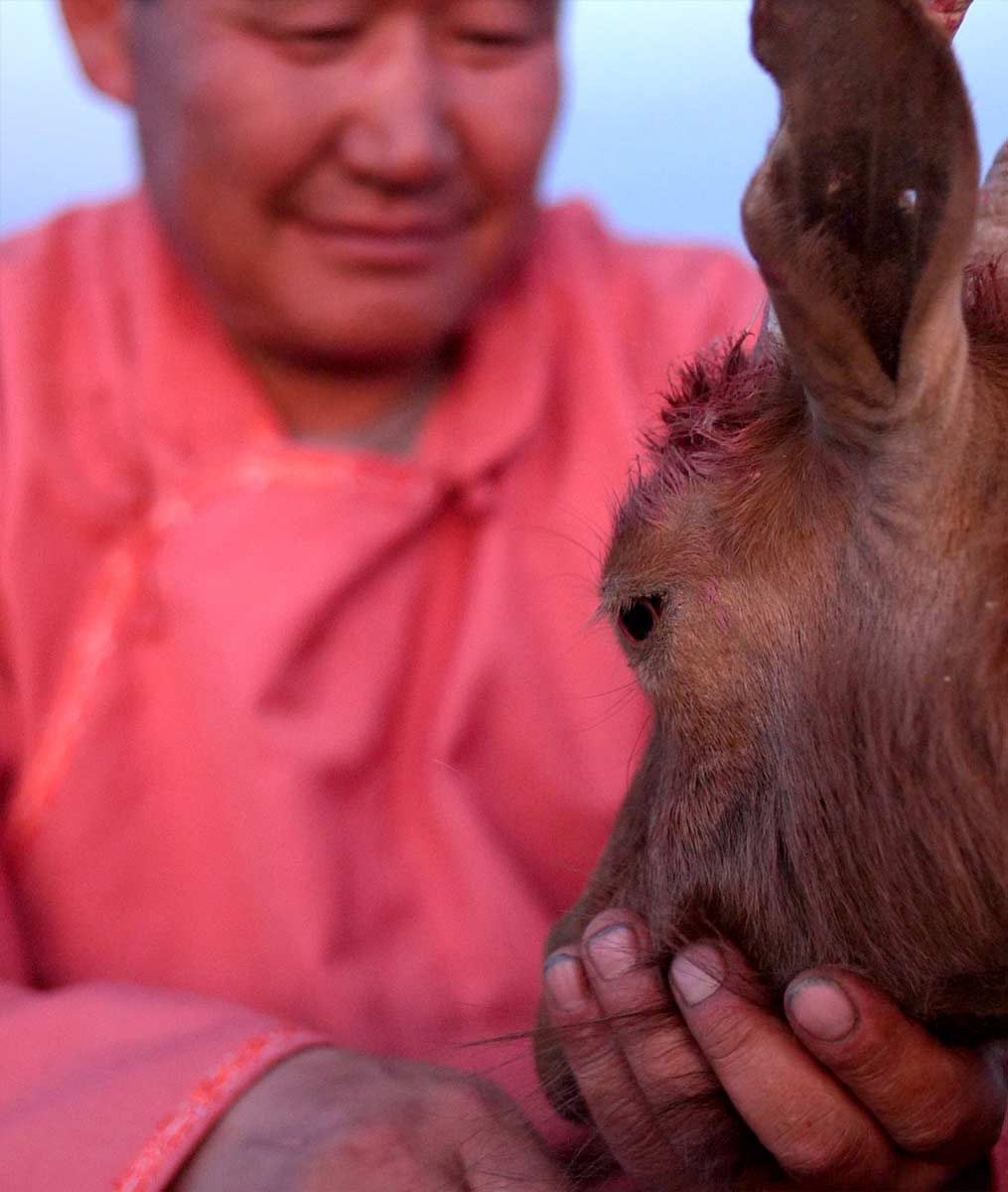
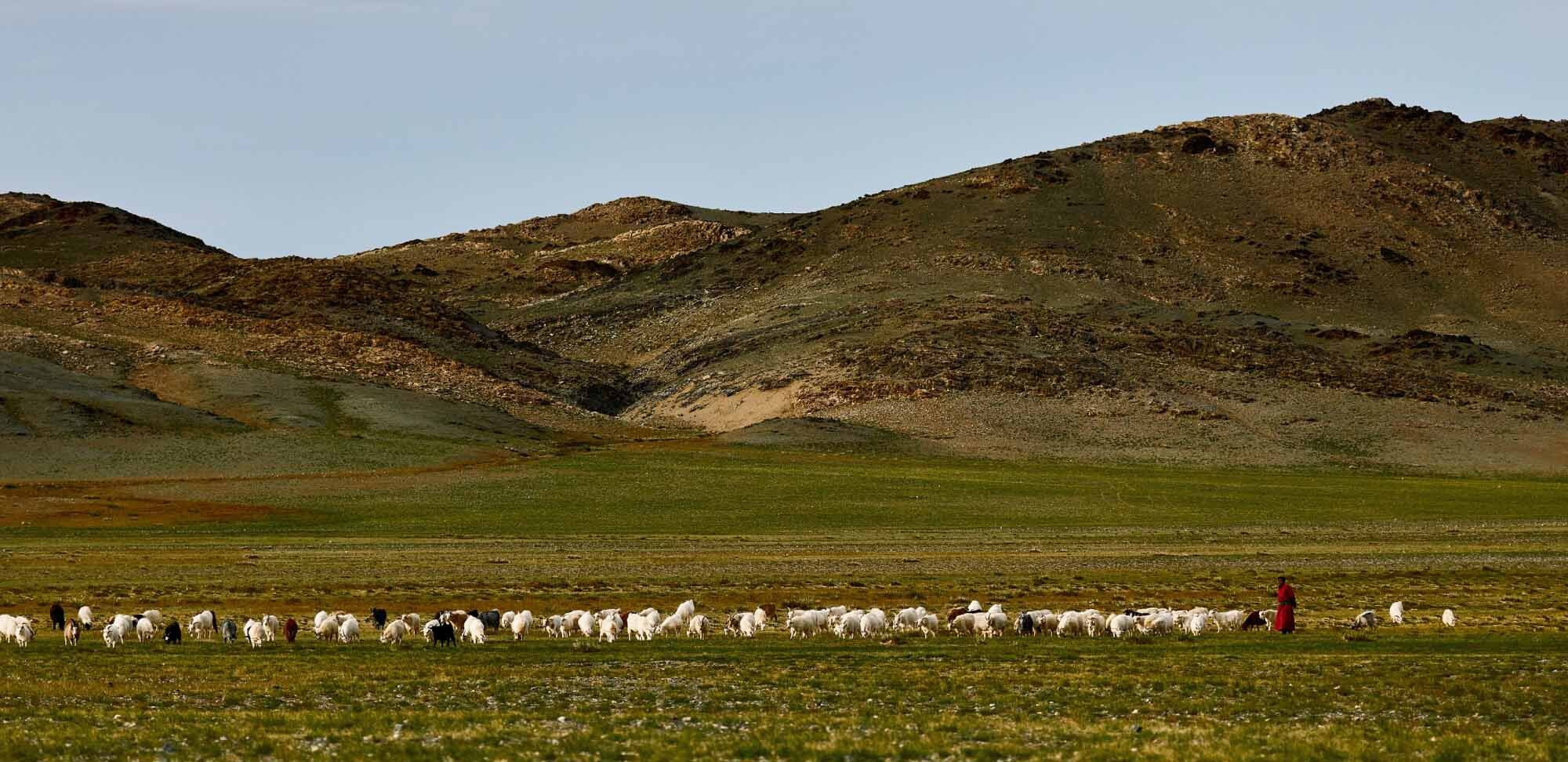
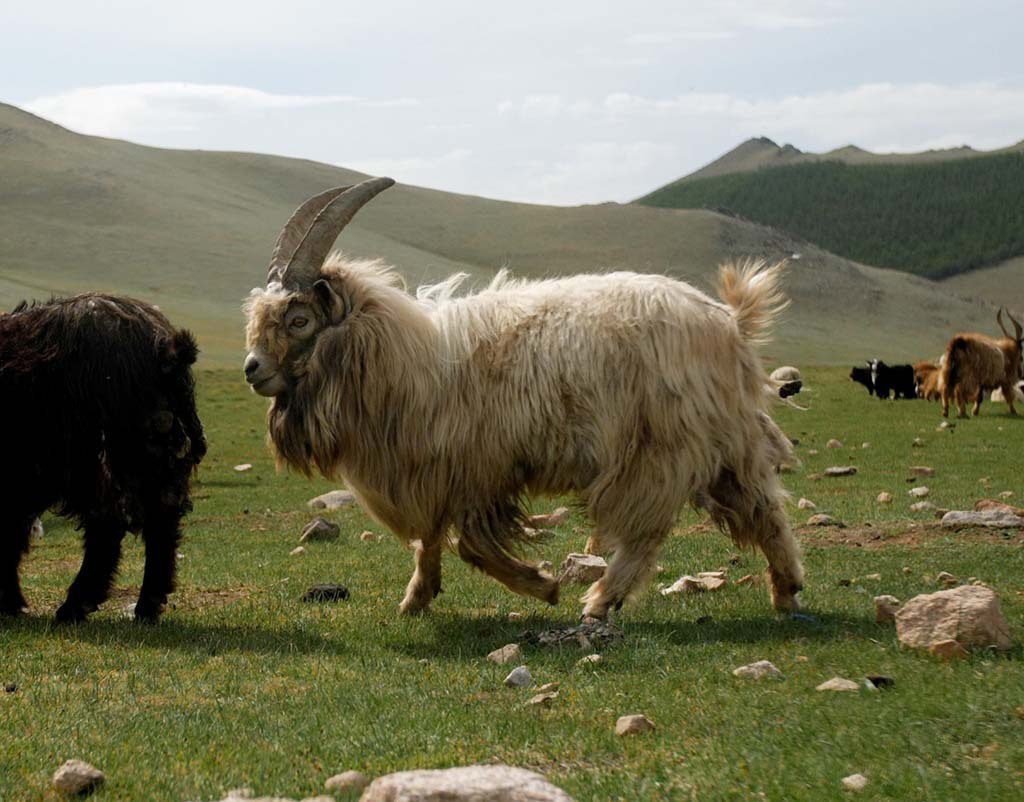
In 2015 we helped establish the Sustainable Fibre Alliance, a non-profit international organisation working with the extended Cashmere supply chain, from herders to retailers. With a focus on restoring grasslands, ensuring animals' well-being, and securing herders' livelihoods, the SFA funds specific programmes in Mongolia to train communities and promote sustainability.
2016
Johnstons of Elgin's transition to a more integrated lifestyle brand began in 2016, cemented by our London Fashion Week debut in 2018. Johnstons of Elgin's exceptional craftsmanship continues to be appreciated worldwide.

2019
We established the first course in Sustainable Pasture Management, managed for us by the SFA, in 2019.
Called "Haraacai" (the Mongolian word for swallow), this course teaches nomadic herders' children sustainable herding methods. It combines modern sustainability theories with the traditional skills passed down through generations embedded within their centuries-old nomadic culture.
2021
In April 2021, we were proud to receive the Queen's Award for Enterprise, for our work on sustainability.
The Queen's Awards for Enterprise is the most prestigious business awards programme in the world, and the Sustainable Development category recognises organisations developing products and services that have a positive impact on the environment, society and the economy.
2022
Our Scottish heart has been combined with a global outlook from our founding. Today, we have 5 offices worldwide, and our products are sold in 65 countries.
Our exemplary relationships with our international clients, fibre suppliers, trade partners and customers remain at the forefront of who we are. As we again enter a new era where concepts of time, speed and distance are evolving, our international relations and human connections proudly embody our 225-year heritage.
We have worked with natural, renewable, biodegradable fibres since 1797, and our commitment to sustainability is at the heart of our brand's values.
We aim to tread lightly and reduce our environmental footprint year on year, but we know we still have work to do. In 2015 we helped establish the Sustainable Fibre Alliance, a non-profit international organisation working with the extended Cashmere supply chain, from herders to retailers.
With a focus on restoring grasslands, ensuring animals' well-being, and securing herders' livelihoods, the SFA funds specific programmes in Mongolia to train communities and promote sustainability.

Our Scottish heart has been combined with a global outlook from our founding. Today, we have 5 offices worldwide, and our products are sold in 65 countries.
Our exemplary relationships with our international clients, fibre suppliers, trade partners and customers remain at the forefront of who we are.
We work with Responsible Wool Standard Certified Merino Wool and Sustainable Fibre Alliance Cashmere to protect our environments. We proudly safeguard animal welfare, soil health, and biodiversity and promote sustainability throughout the supply chain and created the Johnstons Sustainability Award to support the nomadic culture and livelihoods of our cashmere herders and communities.
As we again enter a new era where concepts of time, speed and distance are evolving, our international relations and human connections proudly embody our 225-year heritage.


