Argyle Knitwear: The Scottish Origins, Craft and Timeless Design

Argyle knitwear is one of Scotland’s most recognisable textile traditions. Its diamond pattern, clean geometry, and Highland roots give it a cultural weight that few knit designs can match. Today, Argyle appears in fashion houses, golf clubs, and luxury collections worldwide, yet its story begins in the Scottish Highlands and continues through the work of makers such as Johnstons of Elgin, who reinterpret the pattern with modern craftsmanship.

The story begins in Argyll, the historic territory of Clan Campbell. The clan’s tartan featured a diamond-based layout, and as knitting developed across the Highlands, these motifs shifted from woven cloth into knitted patterns. The move from tartan to knitwear allowed craftspeople to adapt geometric motifs, create knitwear suited to the climate, and experiment with colour placement and pattern scale.

By the 17th and 18th centuries, Highland knitters were producing patterned socks with diamond motifs inspired by clan tartans. These early pieces are the foundation of the modern Argyle pattern. Argyle is more than decoration. It reflects Clan identity, regional craftsmanship, and the evolution of Scottish textile skills. This grounding in place is part of why the pattern still resonates today.

Argyle became internationally recognised in the 1920s when it entered the world of golf. The Duke of Windsor, known for his influence on men’s fashion, wore Argyle socks and jumpers on the course. His style choices helped push the pattern into mainstream popularity. Golfers adopted Argyle because the pattern stood out on the green. It paired well with tweed and traditional golfing attire. This association remains strong today, and Argyle is still linked to classic golf style.

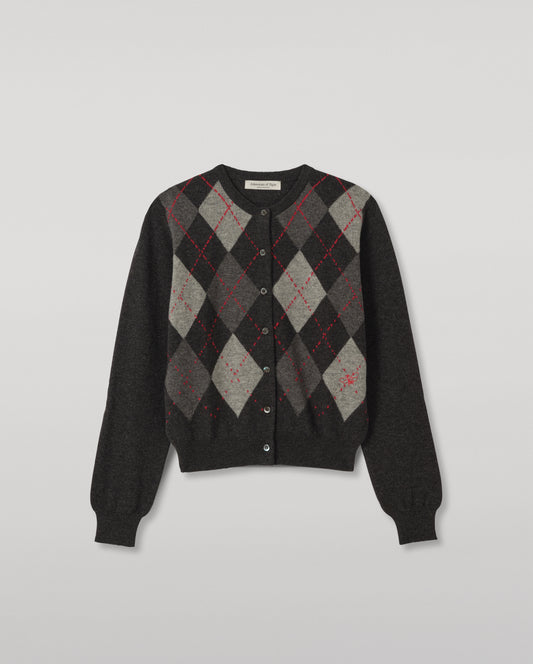
Argyle is not a simple pattern. Its clean geometry requires careful planning and skilled knitting. The process begins with mapping out the diamond grid, the colour palette, and the diagonal overlay lines. Colour balance is essential. Traditional Argyle uses three colours, but modern versions may use tonal or monochrome palettes.

Argyle is created using intarsia, a technique where each colour block is knitted separately. The Intarsia technique creates crisp, well-defined diamonds, a smooth reverse side, and a lightweight, flexible finish. This technique requires precision, especially when linking colours at the edges of each diamond.

Johnstons of Elgin & Argyle

Known for cashmere and fine woollens, Johnstons of Elgin brings a refined approach to traditional patterns, including Argyle.

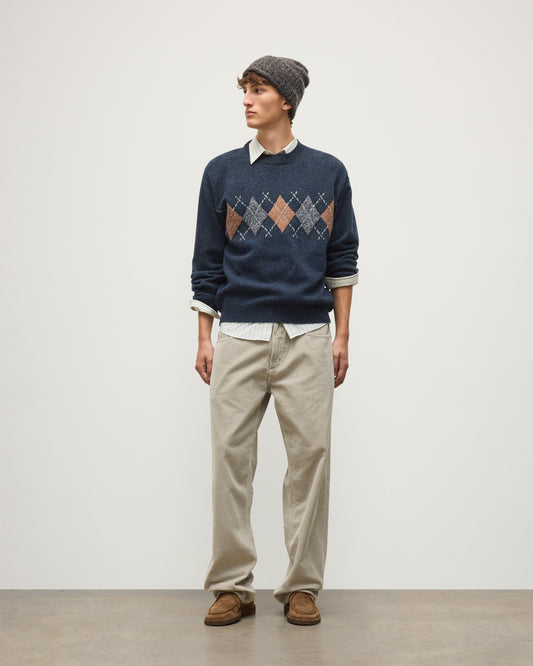
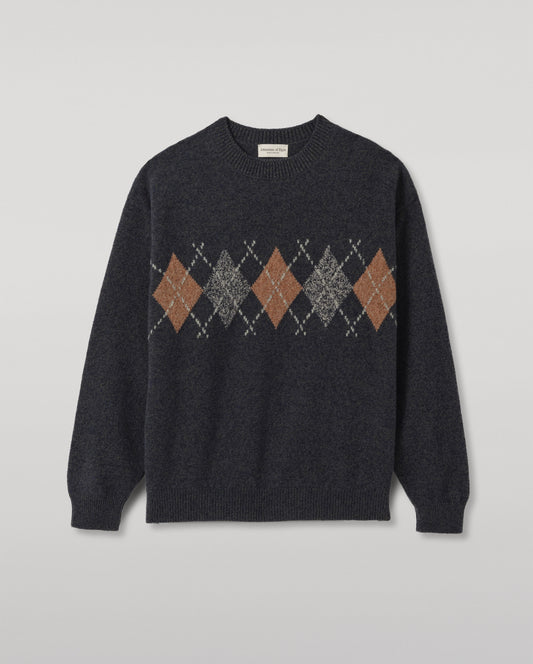
We combine centuries of Scottish textile knowledge with modern design. Our Argyle pieces often feature cashmere for softness and warmth, subtle, landscape-inspired colour palettes, and contemporary silhouettes that update the classic pattern - keeping the design rooted in Scottish tradition while making it relevant for modern wardrobes.

We control the entire craft process in-house, from raw fibre to finished garment. Each Johnstons of Elgin Argyle piece is finished by hand, with hand-linked seams, careful blocking to shape the garment, and detailed inspection to ensure pattern accuracy. This ensures the pattern remains sharp and the garment meets the highest standards.

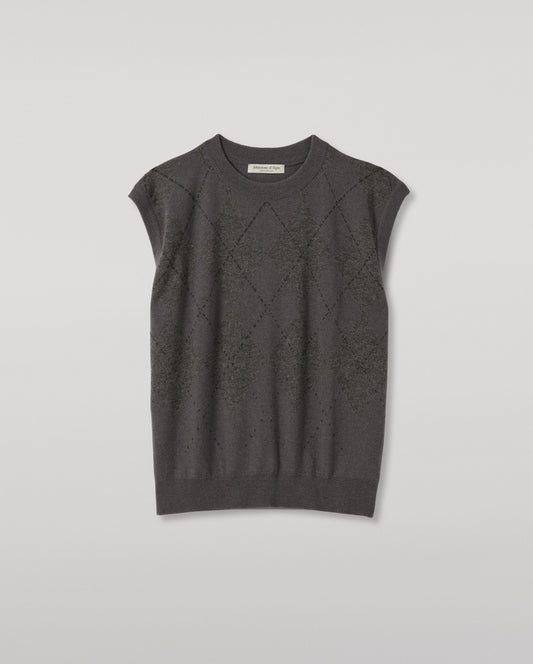
JOHNSTONS OF ELGIN WOMENS ARGYLL LE JABOTS SLEEVELESS CREW GREY 100% CASHMERE KAP05766JU1611

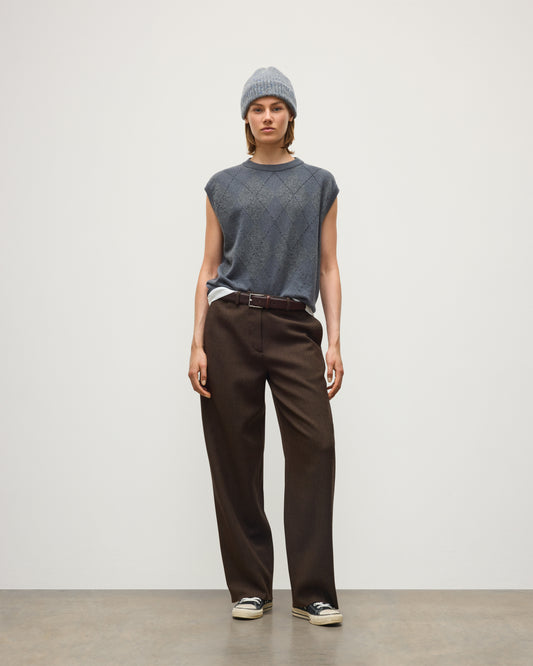
The Le Jabots is a crew sweater vest expertly made in our Hawick Mill using our unique Argyle intarsia, inspired by the traditional Scottish lace jabot. Crafted in the finest woollen-spun cashmere, using 2-ply yarns and tightly knitted for an authentic Scottish hand feel.

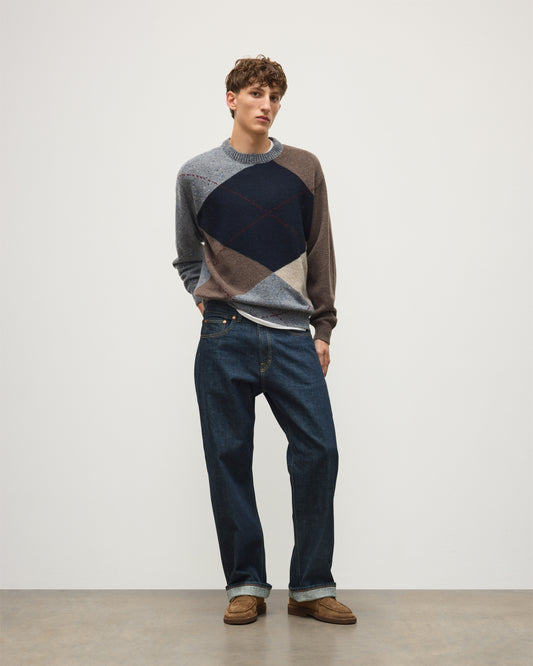
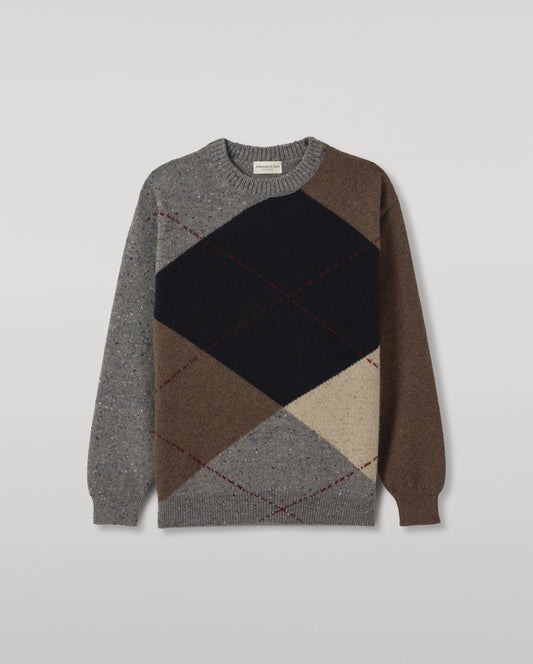
In our latest collection, you will find classic jumpers with traditional diamond layouts, modern designs using tonal or resized motifs, and accessories with subtle Argyle references. Showcasing how a historic pattern can evolve without losing its identity. Argyle endures because it carries a strong sense of Scottish identity, the geometric pattern suits both classic and modern fashion, it works across seasons and styles, and it adapts perfectly to luxury fibres such as cashmere.

JOHNSTONS OF ELGIN CLAN BANDANA MID GREY 100% CASHMERE HAP03612JU1614ONE

Heritage meets modernity in the Clan Bandana, designed in pure cashmere for a softer interpretation of a traditional shape. Lightweight yet warming, it can be styled in multiple ways and features a traditional Argyle diamond pattern.

Argyle can be bold or understated depending on colour and scale. Pair your classic Argyle jumper with denim for a relaxed look or wear an Argyle vest over a shirt for a clean, heritage-inspired outfit. Opt for tonal Argyle for a modern, minimalist style and use Argyle accessories to add pattern without overwhelming an outfit

Collapsible content

FAQ

What is Argyle knitwear?

Argyle knitwear features a diamond-based pattern with diagonal overlay lines, traditionally linked to Clan Campbell of Argyll in Scotland.

Where did the Argyle pattern originate?

The pattern evolved from the tartan of Clan Campbell and developed into knitted designs in the Scottish Highlands.

How is Argyle knitwear made?

Authentic Argyle uses intarsia knitting, where each colour block is knitted separately to create clean, defined diamonds.

Why is Argyle linked to golf?

The pattern became popular in golf during the 1920s, especially after the Duke of Windsor wore Argyle socks and jumpers on the course.

What makes Johnstons of Elgin’s Argyle special?

Their pieces combine Scottish craftsmanship, luxury fibres, and modern design, all produced in Scotland from fibre to finished garment.

Which fashion houses and brands are featuring Argyle in their collections today?

Argyle has become a defining motif across modern luxury fashion, with a wide range of global houses reinterpreting this historic Scottish pattern in their runway shows and seasonal knitwear collections. Brands such as Louis Vuitton, Gucci, Dior Men, Burberry, Thom Browne, Ralph Lauren Purple Label, and Pringle of Scotland have all showcased Argyle in recent seasons, each drawing on its graphic structure and deep cultural heritage.